2D Laser Scanners for Room Mapping and Architecture
2D laser scanners are powerful tools for capturing accurate spatial data. They help professionals measure spaces, detect objects, and create reliable layouts faster than traditional methods.
Today, these scanners are used in many fields. For example, they support robotics, industrial automation, security, environmental monitoring, and architectural room mapping.
However, one of their most practical uses is indoor measurement. In architecture, a 2D laser scanner can help capture room dimensions, wall positions, and angles with speed and accuracy.
As a result, professionals can create floor plans with less manual work and fewer measurement errors.
What Are 2D Laser Scanners?
2D laser scanners are devices that use laser beams to measure distances in a two-dimensional plane. They collect data from the surrounding environment without physical contact.
In most systems, the scanner sends out a laser beam. Then, it measures how long the reflected signal takes to return.
Using this information, the device calculates distances and positions. After that, software turns the collected data into useful measurements, maps, or layouts.
This process is fast and highly efficient. Therefore, 2D laser scanning is useful when professionals need accurate information without creating a full 3D model.
How 2D Laser Scanners Work
A 2D laser scanner usually works by rotating a laser beam across a flat plane. While the beam moves, the scanner collects many distance points.
Each point shows how far an object, wall, or surface is from the scanner. Together, these points create a two-dimensional view of the scanned area.
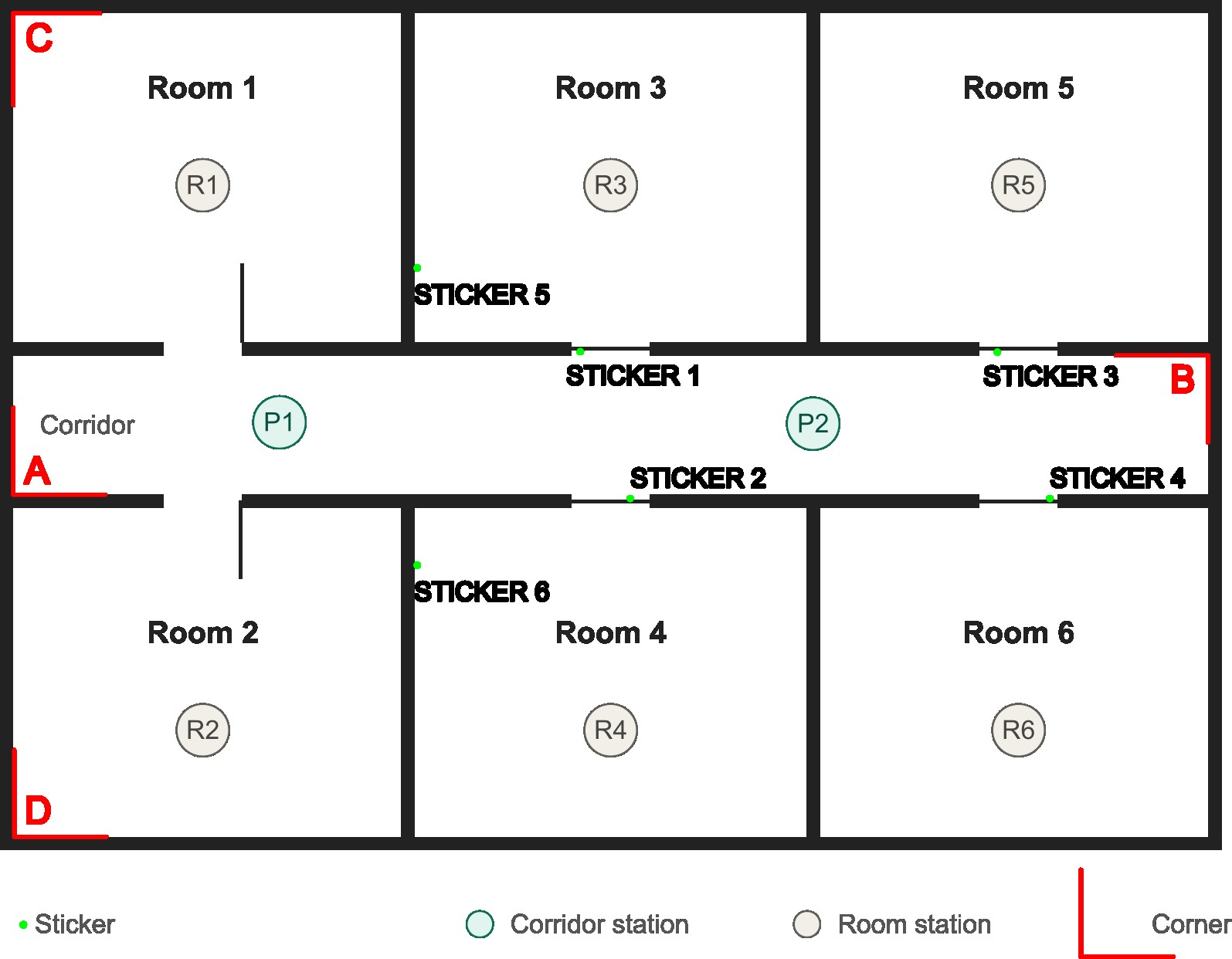
For room mapping, this means the scanner can detect walls, corners, openings, and irregular shapes. As a result, it can help create a clear representation of the room layout.
Unlike manual measuring, this process does not depend on reading a tape measure or writing down every number by hand. Therefore, it can reduce human error and save time.
Main Components of a 2D Laser Scanner
A 2D laser scanner includes several key components. Each part plays an important role in capturing and processing measurement data.
Laser Source
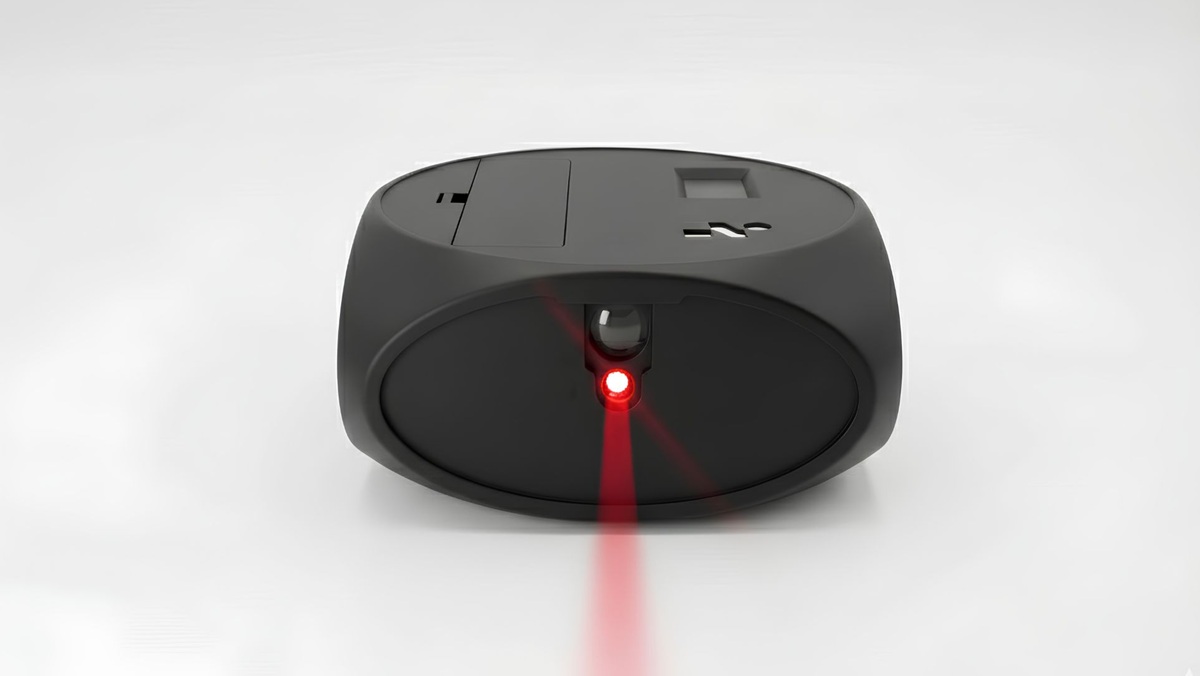
The laser source emits the beam used for measurement. This beam travels toward nearby surfaces, objects, or walls.
Once the beam reaches a surface, part of it reflects back to the scanner. This return signal is then used to calculate distance.
Receiver
The receiver detects the reflected laser signal. It helps the system understand how far the measured surface is from the scanner.
This information is essential for creating accurate dimensional data.
Rotating Mechanism
Many 2D laser scanners use a rotating mechanism. This allows the laser to scan across a wide area in one plane.
Because of this rotation, the scanner can collect many points around the room or object.
Control Electronics
The control electronics manage the scanning process. They coordinate the laser, receiver, rotation, and data collection.
They also help transfer the measured data to software for further processing.
Software
Software turns raw scan data into useful information. It can help create maps, floor plans, layouts, or technical drawings.
For architects and engineers, this step is very important. It connects the scanned measurements with practical design work.
Applications of 2D Laser Scanners
2D laser scanners are used in many industries. Their speed, accuracy, and non-contact operation make them valuable in different professional workflows.
Robotics and Navigation
In robotics, 2D laser scanners help machines understand their surroundings. Robots can use the data to detect obstacles, follow paths, and move safely.
This is especially useful in warehouses, factories, and automated transport systems. As a result, robots can work with more precision and fewer collisions.
Industrial Automation
In industrial automation, 2D laser scanners support inspection, positioning, and safety tasks. They can detect objects and measure distances quickly.
For example, they may help monitor production lines or guide automated machines. Therefore, they can improve efficiency and reduce downtime.
Security and Monitoring
2D laser scanners can also be used for security applications. They can detect movement, monitor restricted areas, and support perimeter protection.
Because they work accurately and continuously, they are useful in environments where reliable detection is important.
Environmental and Terrain Mapping
Some systems use laser scanning for mapping outdoor spaces, terrain, or natural environments. The data can help with analysis, monitoring, and planning.
Although many large-scale mapping projects use advanced systems, 2D scanning still has value in specific measurement tasks.
Architecture and Room Mapping
In architecture, 2D laser scanners are especially useful for room mapping. They can help capture wall positions, angles, and room dimensions.
This makes them practical for renovation projects, interior design, construction planning, and as-built documentation.
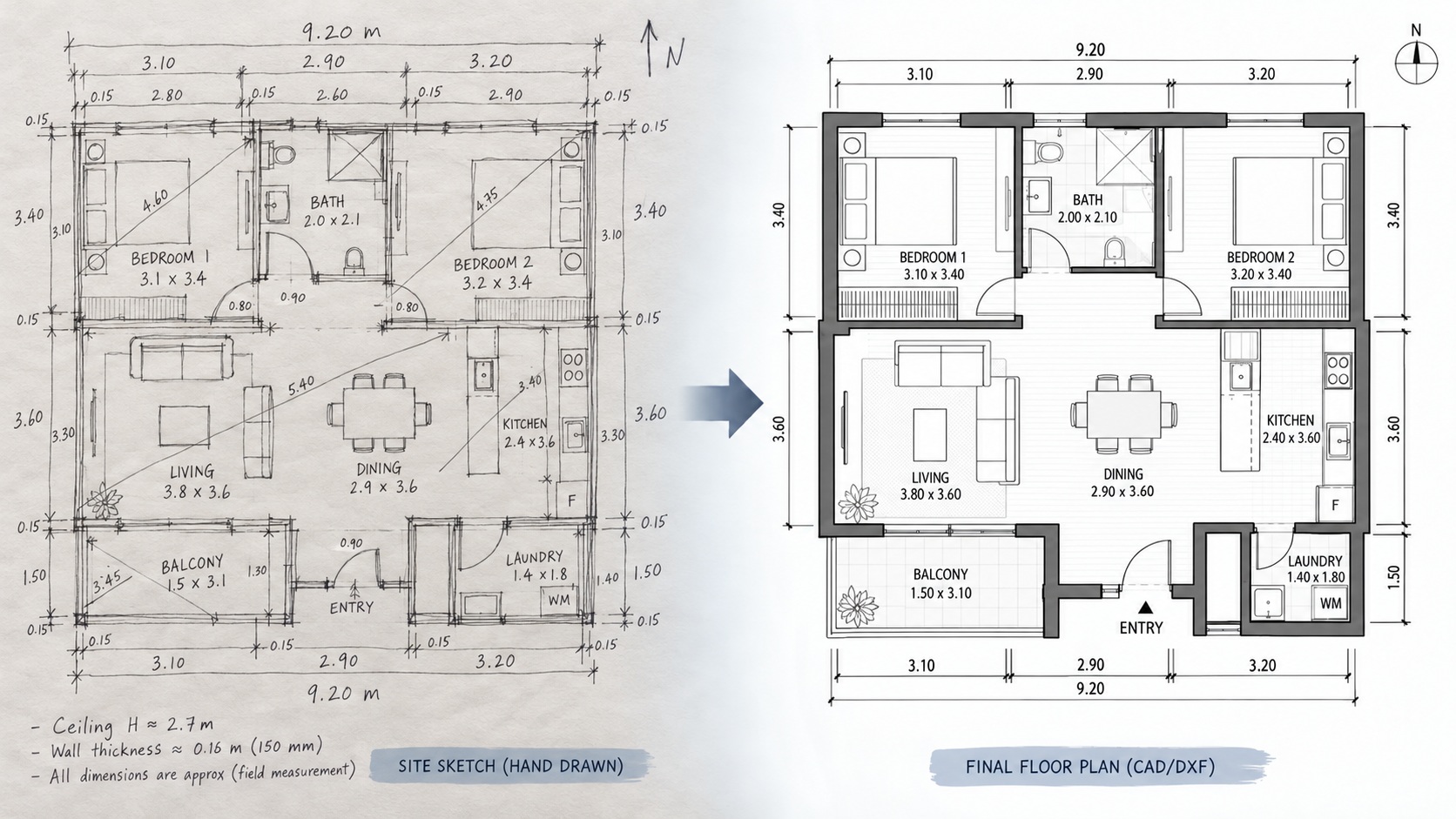
Instead of measuring every wall manually, professionals can scan the space and use the data to create a more reliable floor plan.
Why 2D Laser Scanners Are Useful for Room Mapping
Room mapping requires accurate measurements. A small mistake in a wall length or corner angle can create problems later in the project.
Traditional tools, such as tape measures and handheld distance meters, can still be useful. However, they often require manual notes, sketches, and repeated checks.
By contrast, 2D laser scanners capture many measurements quickly. They also help reduce the risk of missing important details.
For architects, this can make the site survey process faster and more reliable. In addition, it can reduce the need for extra visits to the property.
2D Laser Scanners and CAD Workflows
CAD software is central to modern architectural and technical work. Therefore, measurement data must be easy to use in digital design workflows.
2D laser scanners can support this process by providing accurate spatial data. This data can then be used as a foundation for technical drawings and floor plans.
As a result, architects and designers can move from site measurement to digital planning more efficiently.
This connection between scanning and CAD helps reduce manual transfer errors. It also allows professionals to work with measurements that better reflect the real space.
2D Scanning vs. 3D Scanning
3D scanning is powerful, but it is not always necessary. Many projects do not require full 3D point clouds or complex models.
For example, a renovation project may only need accurate wall positions, room dimensions, and floor plans. In this case, 2D scanning can be a better choice.
It creates less data, requires less processing, and keeps the workflow simpler. Therefore, it can be more practical for everyday architectural tasks.
In many cases, 2D laser scanners offer the right balance between accuracy, speed, and simplicity.
Advantages of 2D Laser Scanners
There are several reasons why professionals choose 2D laser scanners for measurement and mapping tasks.
- Fast data capture: Measurements can be collected quickly on site.
- Improved accuracy: Laser measurement helps reduce manual errors.
- Non-contact operation: The scanner does not need to touch surfaces.
- Useful room mapping: Walls, corners, and layouts can be captured efficiently.
- Simpler workflow: 2D data is easier to manage than large 3D point clouds.
- Better planning: Reliable measurements support CAD and design work.
Because of these advantages, 2D scanning is becoming more useful for architects, engineers, designers, and technical professionals.
Why 2Dscanner Was Created
For many years, expensive 3D scanning systems were available for professional measurement. However, there was no simple and affordable 2D scanning option designed specifically for room mapping.
Although similar technology existed in robotics, it was not created for architects or building professionals. Therefore, it was not always suitable for measuring rooms and creating floor plans.
This gap led to the creation of 2Dscanner. It was designed to offer a faster, simpler, and more affordable way to capture 2D room measurements.
With 2Dscanner, professionals can measure interiors without relying on complex 3D systems. This makes accurate scanning more accessible to architects, civil engineers, designers, surveyors, and other technical users.
Who Can Benefit from 2Dscanner?
2Dscanner is useful for professionals who need accurate interior measurements without unnecessary complexity.
- Architects: Create accurate floor plans for design and renovation projects.
- Civil engineers: Capture reliable existing conditions for technical work.
- Interior designers: Measure rooms before planning layouts and furniture.
- Surveyors: Collect indoor measurements faster and more consistently.
- Contractors: Check room dimensions before construction or installation.
- Carpenters and installers: Measure wall angles and interior spaces more accurately.
In these professions, speed and accuracy matter. Therefore, a practical 2D scanning tool can make everyday work easier.
The Future of 2D Laser Scanners
As technology continues to improve, 2D laser scanners will become even more useful. Better sensors, faster software, and simpler workflows will make scanning easier for more professionals.
In architecture, this can change how buildings are measured and documented. Instead of relying only on manual methods, professionals can use digital tools to capture real-world spaces more accurately.
As a result, projects can begin with better data. This leads to better planning, fewer mistakes, and smoother execution.
Conclusion
2D laser scanners are more than measurement tools. They help professionals work faster, reduce errors, and capture useful spatial data with confidence.
From robotics and automation to architecture and room mapping, their applications continue to grow. However, their value is especially clear when accurate 2D floor plans are needed.
2Dscanner was created to bring this technology to architecture and related professions. It offers a practical alternative when 3D scanning is too expensive, too complex, or simply unnecessary.
To learn more, visit our YouTube channel, explore the help documentation, or read the FAQ section.
With 2Dscanner, professionals can capture accurate room measurements in a simpler and more efficient way.