The price of a 2D laser scanner only makes sense next to the alternatives. A laser distance meter costs less, a 3D scanner costs far more, and a surveyor charges every time you need a plan. Which one is cheapest depends less on the price tag than on how many rooms you measure and what each mistake costs you.
This guide sets out typical prices for every way of getting a floor plan, the running costs that rarely appear in the advertised price, and a simple way to work out when buying a scanner pays for itself. Prices are indicative ranges for professional equipment and services, excluding VAT, and vary by country and dealer.
Price ranges at a glance
| Option | Typical purchase price | Running costs | What you get |
|---|---|---|---|
| Basic laser distance meter | €50-€200 | None | Single distances; the plan is drawn by hand |
| Professional laser distance meter with Bluetooth | €250-€700 | Plan apps are often on a subscription | Distances sent into a sketch on the phone |
| Phone or tablet scanning app | A phone or tablet with a depth sensor | Export features usually on a paid plan | An approximate plan, accurate to centimetres |
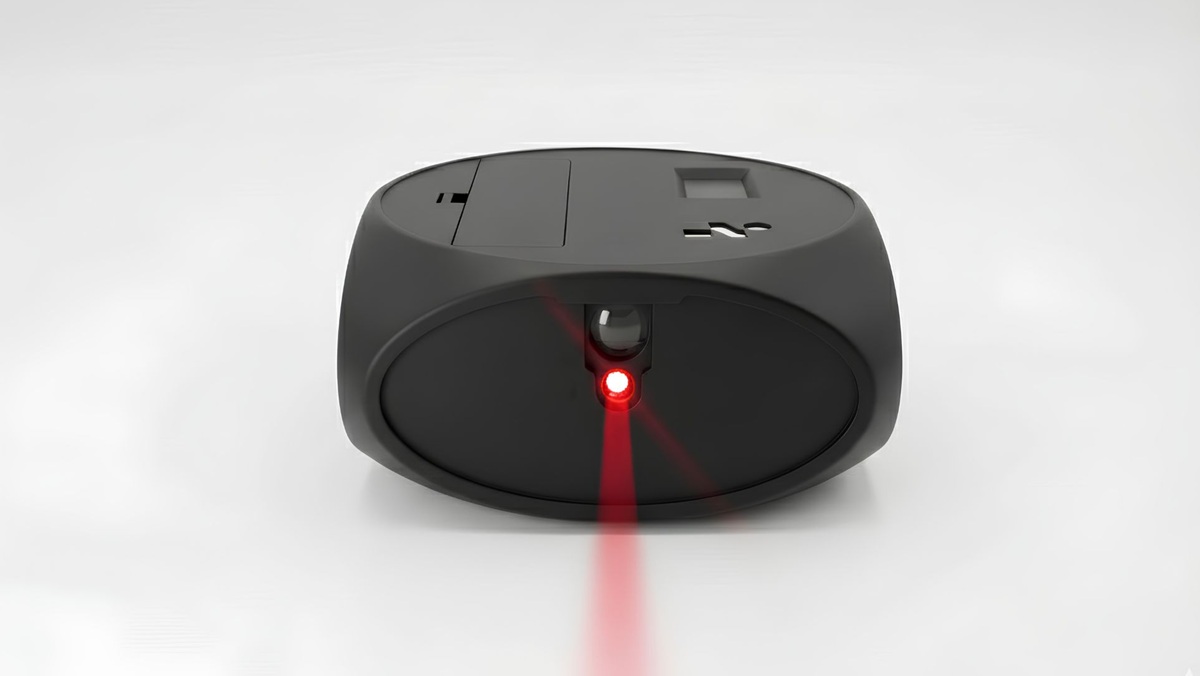
| 2Dscanner EVO | €1,200, one payment | None, no subscription | A measured room outline exported as DXF |
| Other 2D laser scanners | From €1,600 up to €3,000-€4,000 | Some models require a yearly subscription | A measured room outline exported as DXF |
| 3D laser scanner | From around €6,000 for compact models to €30,000 and more | Processing software, often €1,000-€4,000 a year | A full point cloud of every surface |
| Measured survey by a surveyor | No purchase | About €2-€5 per m² for 2D CAD plans, with a minimum fee per job | A finished plan, delivered days later |
The table shows why comparing purchase prices alone misleads. The cheapest tools leave the drawing work to you, the most expensive ones bring software and processing costs with them, and a survey service turns every new room into a new invoice.
What you are actually paying for
In practice, a floor plan has three costs: the instrument, the time on site, and the time it takes to turn the measurements into a drawing. For example, a distance meter is cheap to buy but slow on the other two. A tape-and-meter survey of a single room, with the sketch and the redraw in CAD, easily runs past an hour.
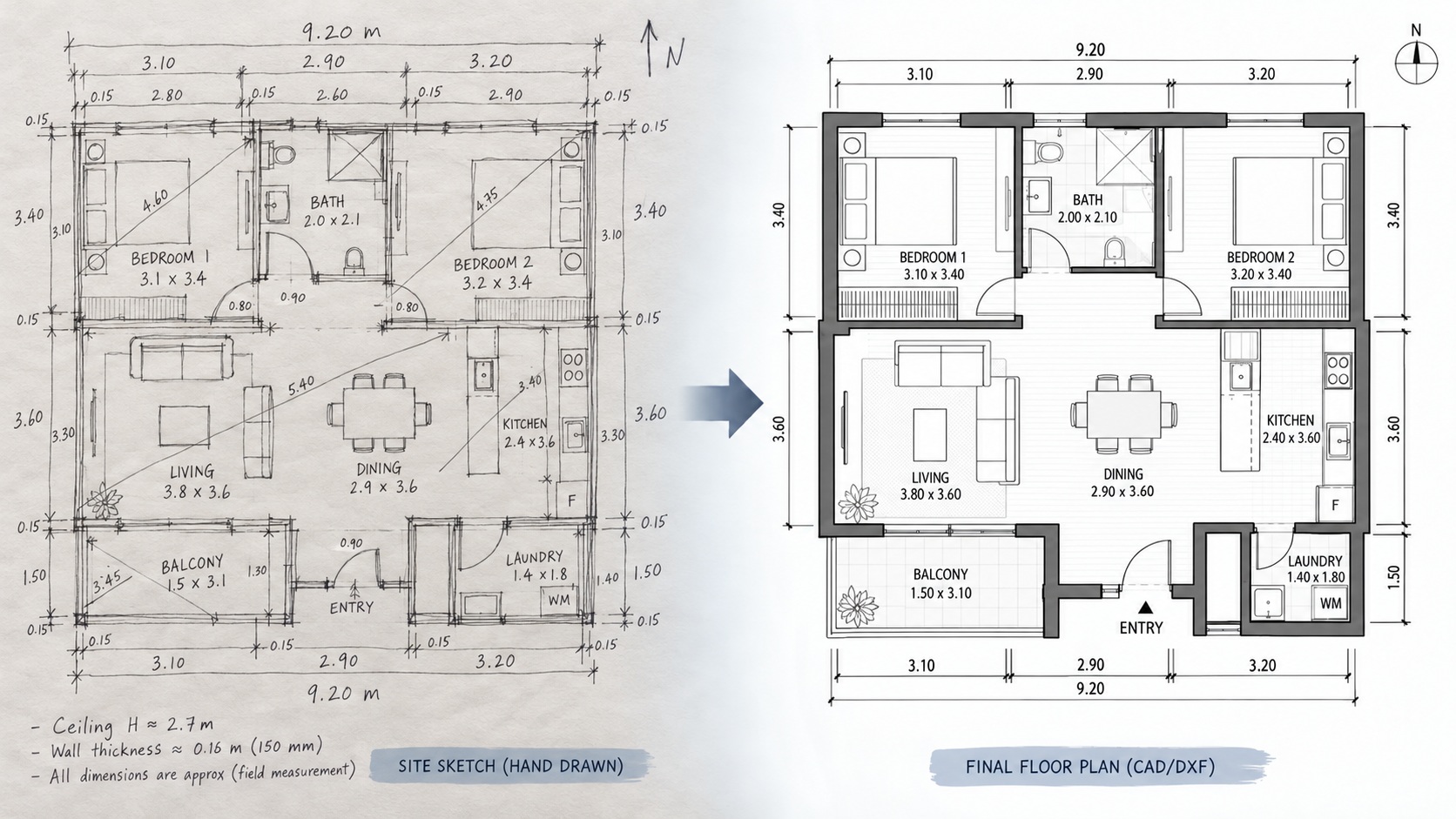
A 2D laser scanner moves the cost to the purchase and takes most of the time out of the job. The scanner measures the room as a set of points in a few minutes, and the plan arrives as a DXF file, so the redraw becomes a trace. Over a year of jobs, the hours saved usually weigh more than the difference in price.
The cost of a wrong measurement
However, the figure that rarely makes it into a price comparison is the cost of getting a dimension wrong. A worktop cut short, a wardrobe that does not fit an out-of-square corner or a second visit to re-measure can each cost more than a basic measuring tool. For anyone who designs or builds to the walls, one avoided remake often covers a large part of a scanner’s price.
This is also where cheap scanning apps fall short. A plan that is accurate to a few centimetres is fine for an estimate or a first client meeting, but it is not a plan you can order joinery from without measuring again.
When paying a surveyor is cheaper
If you need a floor plan once or twice a year, a measured survey service is usually the economical choice. After all, you pay only when you need a plan, someone else carries the equipment and the risk, and the result arrives as a finished drawing. The drawbacks are waiting time, a minimum fee even for a single room, and a new invoice every time the project changes.
When owning a scanner pays for itself
Fortunately, the calculation is simple. Divide the price of the scanner by what you currently spend per room or per job, whether that is a surveyor’s fee or your own hours at your own rate. The result is the number of jobs it takes to break even.
With survey fees that start at a few hundred euros per job, a 2D scanner priced from €1,200 typically pays for itself within a handful of projects. For kitchen fitters, joiners, interior designers and contractors who measure every week, that point comes within the first months.
Hidden costs to check before you buy
Of course, the advertised price is only the start. Before buying any measuring tool, check these points, because they decide what it really costs over three to five years.
- Subscriptions for the app, for plan exports or for cloud storage.
- Paid software needed to process or convert the data before it reaches CAD.
- Accessories such as a tripod, spare batteries and a carrying case.
- Training time before the tool gives reliable results on site.
- Calibration, repair terms and how long the warranty lasts.
- Whether software updates are included or charged separately.
What the 2Dscanner EVO costs
Some 2D laser scanners on the market need a subscription for the app or for exporting plans. The 2Dscanner EVO does not: you buy it with a single payment. In addition, the price includes the Android, iOS and Windows applications, there is no subscription and no cloud account, and the scan files stay on your own phone. It also comes with a two-year warranty, and DHL Express handles delivery.
You can always find the current price on the 2Dscanner EVO product page. For a full comparison of what each type of tool delivers on site, see our guide to laser measuring tools for interior designers.
Common questions
Is a 2D laser scanner cheaper than a 3D laser scanner?
Yes, by a wide margin. A 2D scanner costs a fraction of a survey-grade 3D scanner, needs no processing software, and produces the 2D plan most interior projects actually need. A 3D scanner earns its price on complex or heritage buildings, not on typical rooms.
Do I need a subscription to use a 2D laser scanner?
That depends on the manufacturer, so check before you buy. With the 2Dscanner EVO there is none: the apps and their updates are included with the device.
Can a laser distance meter replace a 2D scanner?
For single distances, yes. For a complete plan, the meter gives you lengths but not angles or positions, so the shape of the room still depends on your sketch and your diagonals. That is where most of the time, and most of the mistakes, come from.
Conclusion
The real price of a 2D laser scanner is its purchase price minus the hours, the second visits and the remakes it saves. For occasional plans, a survey service is the sensible choice. For anyone who measures rooms every week, a one-off scanner with no running costs is usually the cheapest option within the first year.
To see how it works on site, read more about the 2D laser scanner, visit our FAQ section or watch the demonstrations on our YouTube channel.