Introduction
For interior designers, precision is more than a design detail. It is a responsibility. Many designers do not stop at the concept: they run the fit-out, brief the joiner and order the materials, which means a wrong dimension becomes their problem to fix. Laser measuring tools for interior designers exist to make those numbers reliable, but the category covers very different instruments, from a pocket distance meter to a scanner that draws the whole room.
This guide sorts them by what they actually deliver, so you can match the tool to the work you do. If you are looking for the on-site method itself, the order of measurements, the closure check and how to label a sketch, that is covered step by step in how to take measurements for interior design.
Why laser measuring matters for interior design
A miscalculated dimension has expensive consequences: furniture that does not fit, cabinetry that has to be scribed on site, a worktop cut short, or a flooring order that runs out halfway through a room. Unlike architects, who often provide plans for approval, interior designers are frequently responsible for execution. That makes laser measuring a working part of the job rather than a convenience.
- Accurate floor plans prevent costly mistakes and remakes.
- Efficient on-site measuring saves time during client visits.
- Digital outputs make collaboration with contractors and joiners easier.

The main types of laser measuring tools
Most of the confusion around laser measuring tools comes from treating them as one product. They are not. The table below groups them by what you walk away with, which is what decides whether a tool fits interior design work. Times are indicative for a single room of average size, including the time to draw or check the plan.
| Tool | What you get | Time per room | Output | Best for |
|---|---|---|---|---|
| Tape measure | Single distances, by hand; awkward alone beyond a few metres | 45-60 min | Handwritten numbers on a sketch | Furniture and small checks |
| Laser distance meter | Single distances, point to point | 30-45 min | Numbers on a display, sketch by hand | Wall lengths and ceiling heights |
| Laser distance meter with app | Distances sent to a sketch on a phone | 25-40 min | Dimensioned sketch | Simple, mostly rectangular rooms |
| Phone or tablet scanning app | An approximate model of the room | 5-10 min | 3D model with a plan view | Early estimates and concept work |
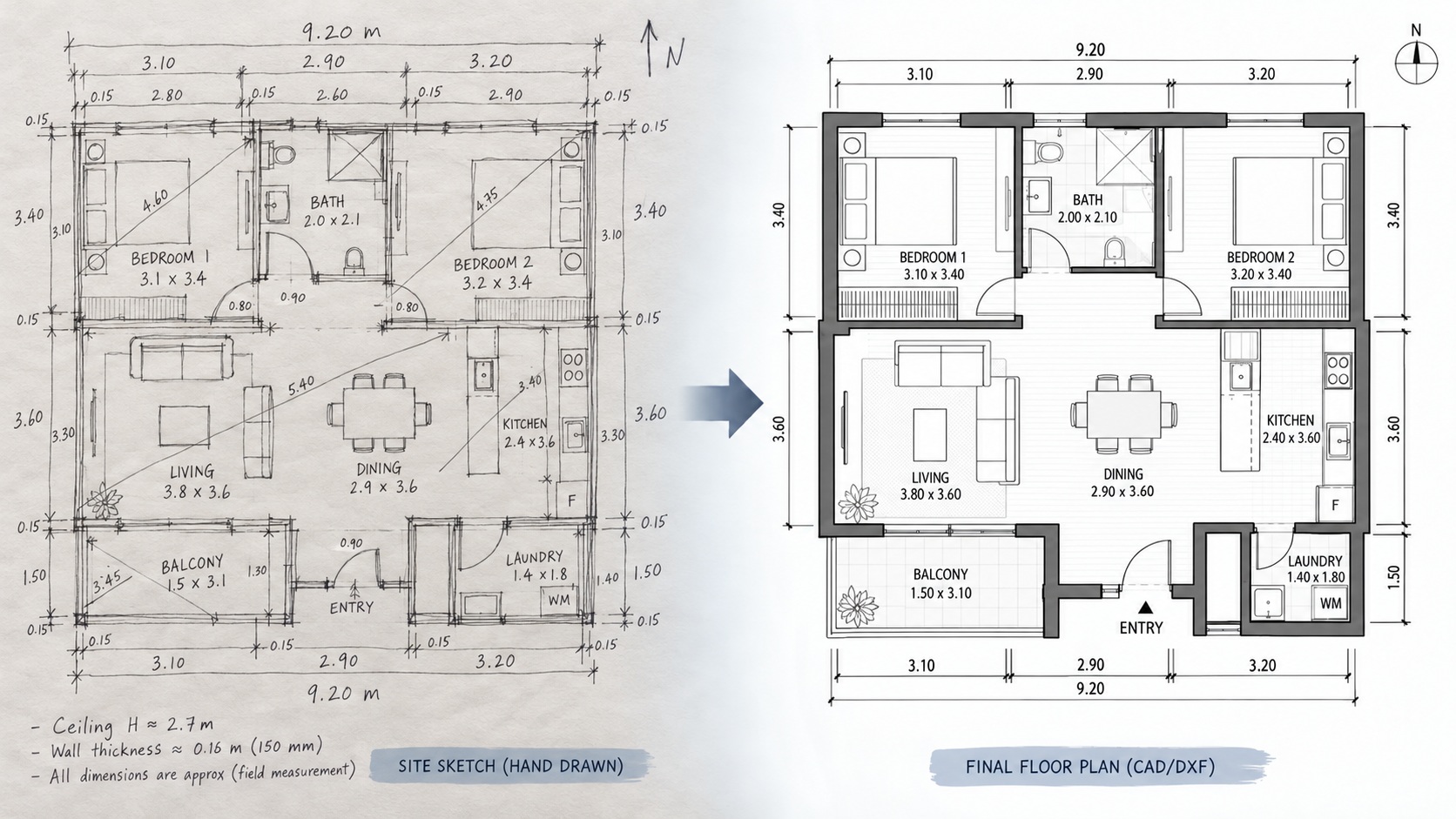
| 2D laser scanner | The complete room outline, walls, corners and angles, from one or a few positions | 5-10 min | Floor plan as DXF | As-built plans for fit-out and renovation |
| 3D laser scanner | A point cloud of every surface in the room | 30 min and more, plus processing | Point cloud, often several gigabytes | Complex geometry and heritage buildings |
The line that matters for most designers is the one between single-distance tools and tools that capture the shape of the room. A distance meter gives you a number. It does not tell you where that number sits, and it does not tell you the angle at the corner. The shape still comes from your sketch.
The limitations of traditional methods
Despite the responsibility they carry, many interior designers still measure with tapes or simple 1D laser measuring devices. These tools are quick for single distances but fail when a complete room layout is needed. Diagonal checks are time-consuming, small errors stack up from wall to wall, and in the end the outline does not close properly, which leads to rework or a repeat visit.
The hidden problem is angles. Very few rooms are truly square, and a corner that is a degree out of square moves the far end of a three-metre wall by about five centimetres. That is enough to stop a fitted unit going in. A single-distance tool cannot see it unless you take and calculate diagonals for every corner.
Why 2D laser measuring tools are ideal for interior designers
Modern 2D laser measuring tools for interior designers provide the right balance between accuracy, speed and practicality. They capture an entire room, walls, corners and angles, in minutes, and produce a clean floor plan that is ready for design work.
Key advantages
- Reliable 2D floor plans for the design and construction phases.
- Smaller files compared to 3D scans, easy to store, email and share.
- Affordable and practical, without heavy subscriptions or advanced software.
- Time-saving, reducing the need for repeat site visits.
- Professional results that match the accountability interior designers carry when managing builds.
Matching the tool to the job
The right tool depends less on budget than on what the measurements will be used for. Four situations cover most interior design work.
Decorating and furnishing
If the job is paint, soft furnishings and loose furniture, a laser distance meter and a careful sketch are enough. Nothing is being built to the walls, so a few millimetres either way change nothing.
Kitchens, wardrobes and fitted joinery
Here the angles and the true wall lengths matter as much as the numbers. Anything built wall to wall depends on the corners, so a 2D laser scanner, or at the very least a distance meter used with a full set of diagonals, is the minimum for work that the joiner will manufacture off site.
Full renovations and multi-room projects
When the plan becomes the base drawing for contractors, electricians and suppliers, it has to be complete and consistent. A 2D scanner gives every room the same method and the same accuracy, and the DXF goes straight into the drawing everyone works from.
Concept stage and first client meetings
A phone scanning app is useful for a first estimate or a quick visual for the client. Its accuracy is usually measured in centimetres, so treat the result as a sketch and measure properly before anything is ordered.
The everyday reality of interior design projects
Interior designers often work in partially finished spaces or renovations where conditions are far from ideal. Rooms are full of furniture, floors are covered, trades are on site and the client is still living there. A full 3D scan is rarely practical or necessary in that setting, and the deliverable the project needs is usually a precise 2D plan.
With 2D laser measuring, the scanner sits on a tripod and measures over and around most of what is in the way, and a second position fills in what the first one cannot see. Designers can produce the plan quickly, avoid errors, and make sure the design matches the room that actually exists rather than the one on the original drawings.
What to check before you buy
Specification sheets all look alike. These are the points that make a difference in daily interior work.
- Accuracy at the distances you actually measure, not only the best figure at short range.
- The output format, and whether your CAD or design software opens it without conversion.
- How it copes with occupied rooms, furniture and partly finished walls.
- Set-up time on site, including how many positions a typical room needs.
- Ongoing costs: subscriptions, cloud processing or paid software for exports.
- Battery life over a full day of site visits, and how it charges.
Where the 2Dscanner fits
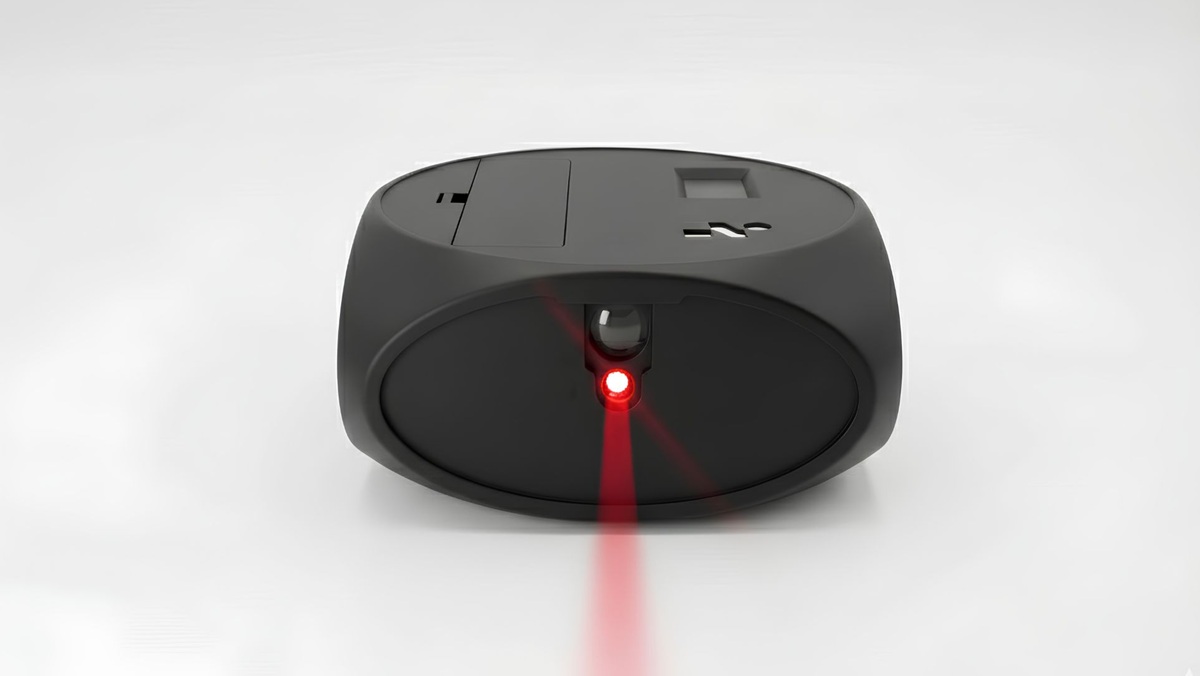
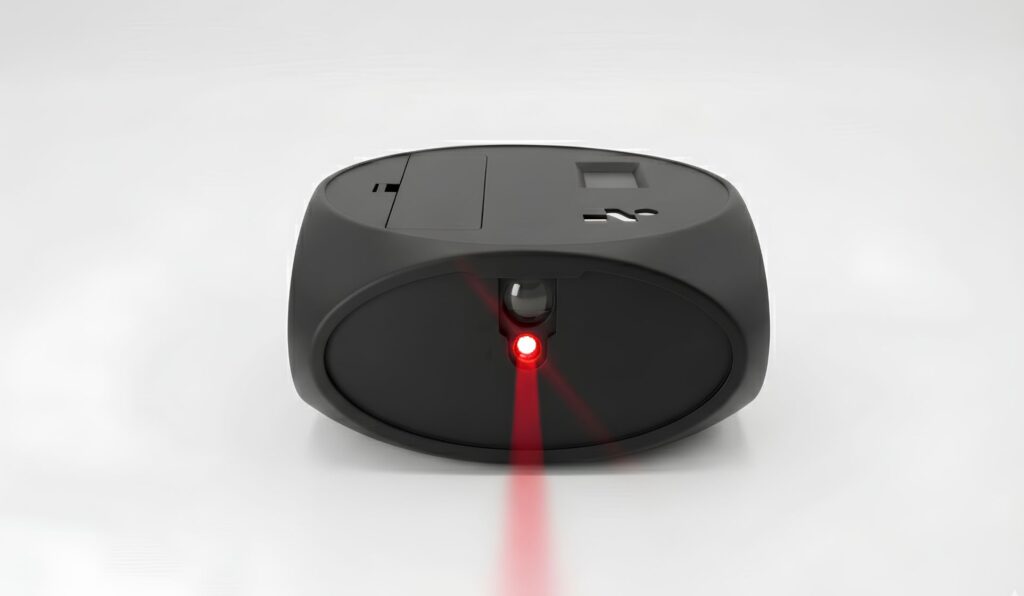
The 2Dscanner EVO is a 2D laser scanner built for exactly this work. It measures to an accuracy of ±2 mm, reaches up to 40 m, and captures 2,000 points in each rotation, so the walls, corners and openings come out as a measured outline rather than a drawing from memory.
A full rotation takes about four minutes, the plan is drawn live in the app on Android or iOS, and the result exports as DXF for your CAD software. It is a single purchase with no subscription.
Common questions
Is a laser distance meter enough for an interior designer?
For decorating and furnishing, yes. For anything built to the walls, such as kitchens, wardrobes and fitted joinery, it is only enough if you also measure and check diagonals in every corner, which is where most of the time goes.
Do interior designers need a 3D scanner?
Rarely. A 3D scanner records far more than a fit-out needs, the files are large, and the point cloud still has to be turned into a 2D plan. It earns its cost on complex or historic buildings, not on typical interiors.
Can a laser-measured plan go straight into CAD?
It depends on the tool. Distance meters give numbers you redraw yourself. A 2D laser scanner that exports DXF gives you a file that opens in AutoCAD and most other CAD and design programs, ready to draw on.
Conclusion
Laser measuring tools for interior designers are no longer optional. They are a professional necessity, because the responsibility for accurate dimensions so often falls on the designer who is directly involved in execution. The right choice is the tool that gives you a complete, trustworthy plan for the work you actually do.
To see how a 2D laser scanner works in practice, visit the 2Dscanner web site, watch the demonstrations on our YouTube channel, or read the answers in our FAQ section.