

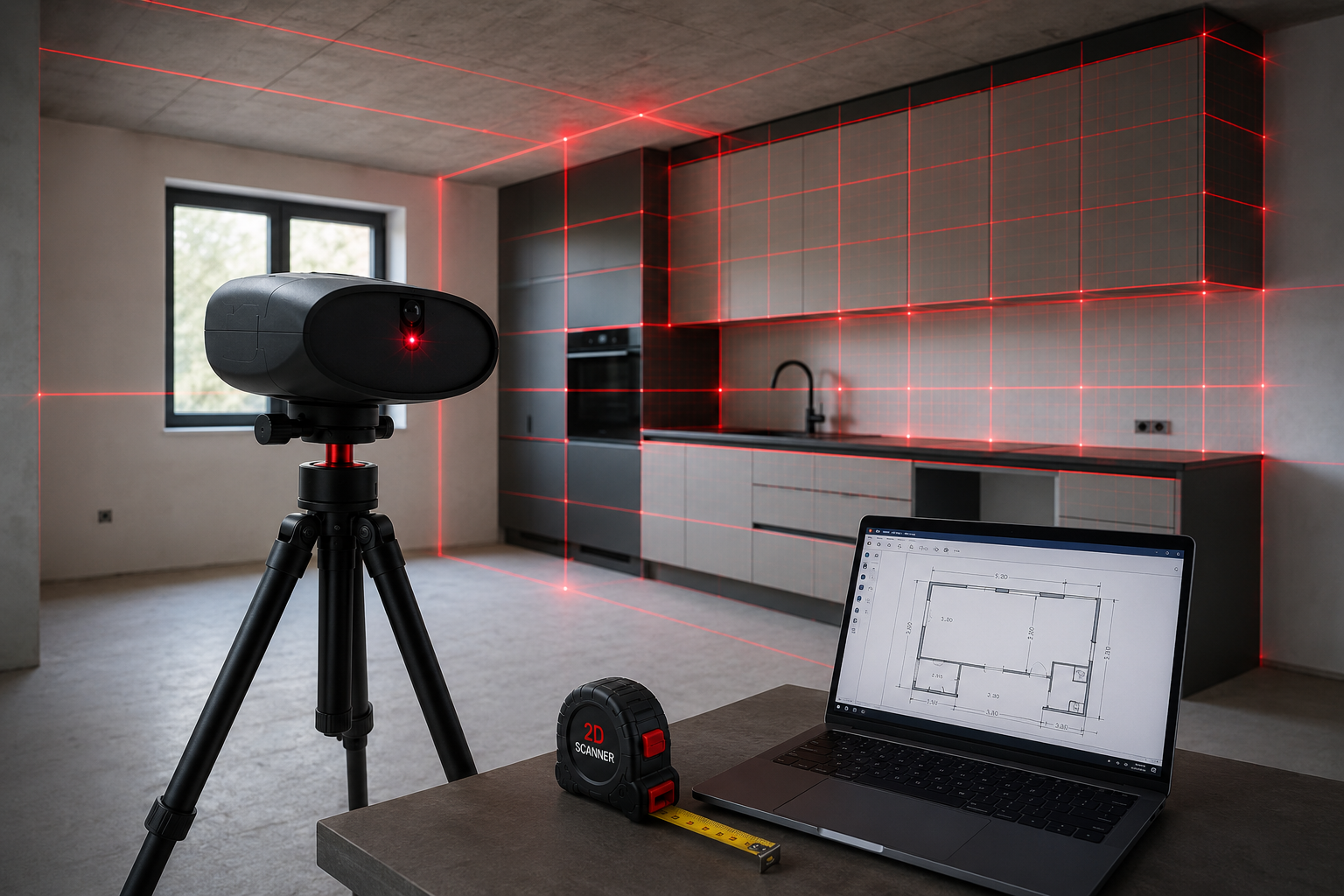
Digital Indoor Mapping: How to Create Fast and Accurate Indoor Floor Maps Without Subscription Costs
Digital indoor mapping device is changing the way contractors and renovation professionals capture interior spaces. However, speed alone is no longer enough. Today, professionals need solutions that reduce repeated measurements, simplify workflows, and eliminate avoidable project delays.
Many projects lose valuable time not because of poor workmanship, but because inaccurate information creates problems later during installation or manufacturing.
The challenge is no longer simply measuring a room. The challenge is capturing the room correctly the first time.
What Slows Down Indoor Mapping Projects?
Many contractors assume the biggest problem is measuring speed. In reality, most delays happen after the measurements are completed.
Common workflow problems include:
- Repeated site visits
- Missing dimensions
- Incomplete room scans
- Manual calculations
- Hidden wall irregularities
- Poor communication between teams
Consequently, contractors often spend additional time verifying information that should have been captured during the first visit.
Why Traditional Measuring Methods Create Hidden Errors
Manual measurements can appear correct at first. However, real construction environments rarely behave like perfect drawings.
For example, several hidden factors affect measurement quality:
- Plaster thickness variations
- Curved wall surfaces
- Uneven room geometry
- Irregular corners
- Structural movement over time
As a result, dimensions collected manually may slowly introduce accumulated inaccuracies throughout a project.
One of the most common mistakes professionals make is relying heavily on diagonal measurements.
While diagonals are useful reference points, they rarely represent the real geometry of a space because walls almost never remain perfectly straight.
Even small deviations of only a few millimeters can accumulate across multiple measurements and eventually create installation issues in cabinetry, kitchens, carpentry projects, and custom furniture manufacturing.
Professionals working with kitchen installations can explore additional measurement techniques in this guide:
How to Accurately Measure Kitchen Angles for Carpentry Projects
How Contractors Reduce Repeat Site Visits
Returning to a job site because of missing measurements creates unnecessary cost and delays.
Therefore, many professionals now focus on collecting complete room information during the first visit.
Effective workflows usually include:
- Capturing room boundaries
- Recording openings and transitions
- Documenting difficult corners
- Saving digital project information
- Exporting project files immediately
Because project information becomes easier to review later, teams spend less time repeating work.
Can i have indoor mapping without subscription Fees?
- Subscription costs have become a common concern for contractors and independent professionals.
- Although many software platforms require recurring payments, professionals often prefer flexible systems that avoid long-term operational expenses.
- As a result, choosing a digital indoor mapping workflow that fits both technical and financial requirements becomes increasingly important.
The answer for 2DScanner EVO is yes -> Try now
Indoor Mapping for Large Spaces and Renovation Projects
Large commercial properties and renovation projects introduce unique challenges.
Unlike empty spaces, renovation environments often contain:
- Existing furniture
- Structural modifications
- Wall inconsistencies
- Limited accessibility
- Complex room layouts
Therefore, having complete digital room information becomes extremely valuable during planning stages.
Choosing the Right Digital Indoor Mapping Device
Selecting an indoor mapping device is not simply about speed.
Professionals often evaluate:
- Measurement consistency
- Ease of use
- Workflow simplicity
- Export flexibility
- Project organization
Solutions such as the 2DScanner EVO help simplify room scanning workflows while helping professionals capture room geometry more efficiently.
Related Resources
For more information about digital measurement workflows and floor plan technologies:
FAQs – Frequently Asked Questions
Can indoor mapping reduce repeat site visits?
Yes. Capturing complete room information during the first visit reduces missing measurements and repeated work.
Why do contractors experience hidden measurement errors?
Wall irregularities, plaster thickness variations, and room geometry inconsistencies often create accumulated errors.
Can indoor mapping work without subscriptions?
Some workflows and devices can operate without recurring subscription costs.
Why are diagonal measurements sometimes inaccurate?
Because walls and corners rarely maintain perfect geometry in real construction environments.
Can digital indoor mapping improve renovation projects?
Yes. Digital room information helps contractors plan more effectively and avoid installation problems.
What should contractors look for in an indoor mapping device?
Ease of use, reliable measurements, workflow efficiency, and flexible export options are important considerations.
👉
Read more about the 2Dscanner,
Check in action on our YouTube channel,
or visit the FAQ section.
